
A torque reaction arm is a mechanical support device used to hold a tightening tool and transfer the reaction torque generated during fastening to a fixed structure. Instead of allowing the operator’s wrist, arm, and shoulder to absorb the reaction force, the arm directs it into a workbench, column, floor mount, or gantry structure.
Torque reaction arms are commonly used in repetitive industrial assembly tasks where tool weight, tightening torque, operator fatigue, or process consistency becomes difficult to manage manually. This article explains how torque reaction occurs, how a reaction arm works, the main structural types, and what to consider before selecting one.
What Is a Torque Reaction Arm?
A torque reaction arm is a workstation-mounted support structure designed to hold an electric or pneumatic tightening tool and absorb the opposing torque generated when a fastener is tightened. The reaction load is transferred from the tool holder through the arm structure and into a fixed mounting point, such as a workbench, column, floor base, wall mount, or overhead frame.
Depending on the workstation layout, a torque reaction arm may use linear guides, articulated joints, telescopic tubes, folding structures, or a combination of these mechanisms. A spring balancer or pneumatic balancing system may also be used to support the weight of the tightening tool and make it easier for the operator to move between fastening points.
A standard mechanical torque reaction arm does not determine the final tightening torque or record fastening results by itself. Torque control is handled by the tightening tool and its controller. However, when the arm is equipped with position sensors and connected to a workstation control system, it can also support position verification, tightening-sequence guidance, and assembly error-proofing.
If you are evaluating a system for an assembly workstation, you can compare KURAN’s industrial torque reaction arm solutions by torque capacity, arm structure, working reach, installation method, and position-control requirements.
What Is Reaction Torque and Why Does It Occur?
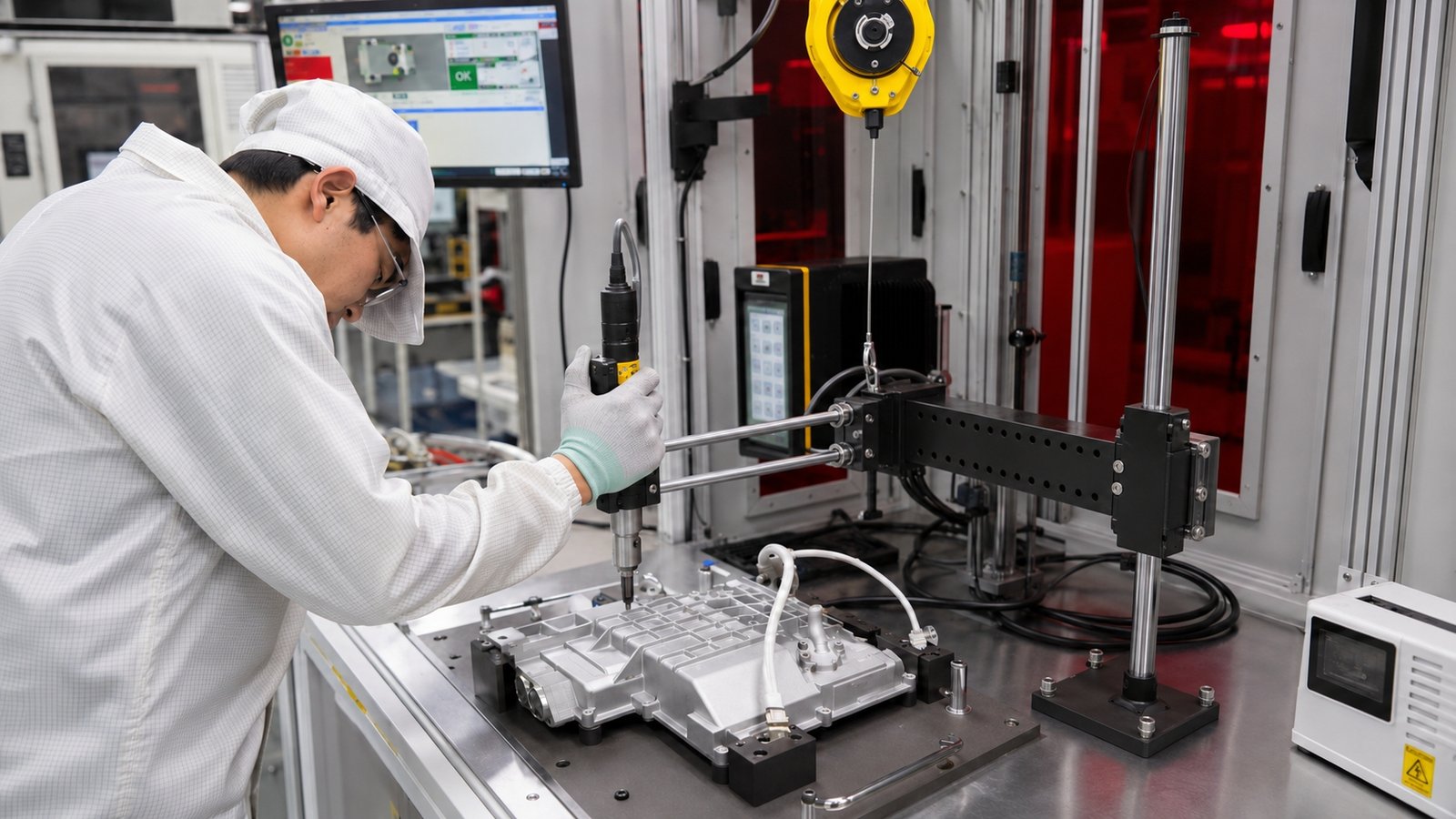
Reaction torque is a normal consequence of applying rotational force to a fastener. When an electric or pneumatic tightening tool rotates a bolt in one direction, an opposing torque acts on the body of the tool in the opposite direction. This follows Newton’s Third Law: every action produces an equal and opposite reaction.
The effect becomes most noticeable when the fastener approaches its target torque. As resistance at the joint increases, the tool must apply more torque to continue rotating the fastener. At the same time, the tool housing experiences an opposing reaction torque that must be resisted by the operator or transferred into a supporting structure.
Reaction torque and the force felt by the operator are related, but they are not exactly the same measurement. The force experienced at the hand depends on the reaction torque, the distance from the rotational axis, the operator’s grip position, and the orientation of the tool.
Without mechanical support, the operator’s wrist, arm, and shoulder become part of the reaction path. During repetitive or high-torque fastening, this can make the tool more difficult to control, increase physical strain, and produce sudden tool movement when the target torque is reached. A torque reaction arm provides an alternative load path by transferring the reaction torque into a fixed workstation structure.
Reaction torque is not a tool defect. It is a normal physical result of applying tightening torque and must be safely resisted by the operator or transferred to a mechanical support structure.
How Does a Torque Reaction Arm Work?
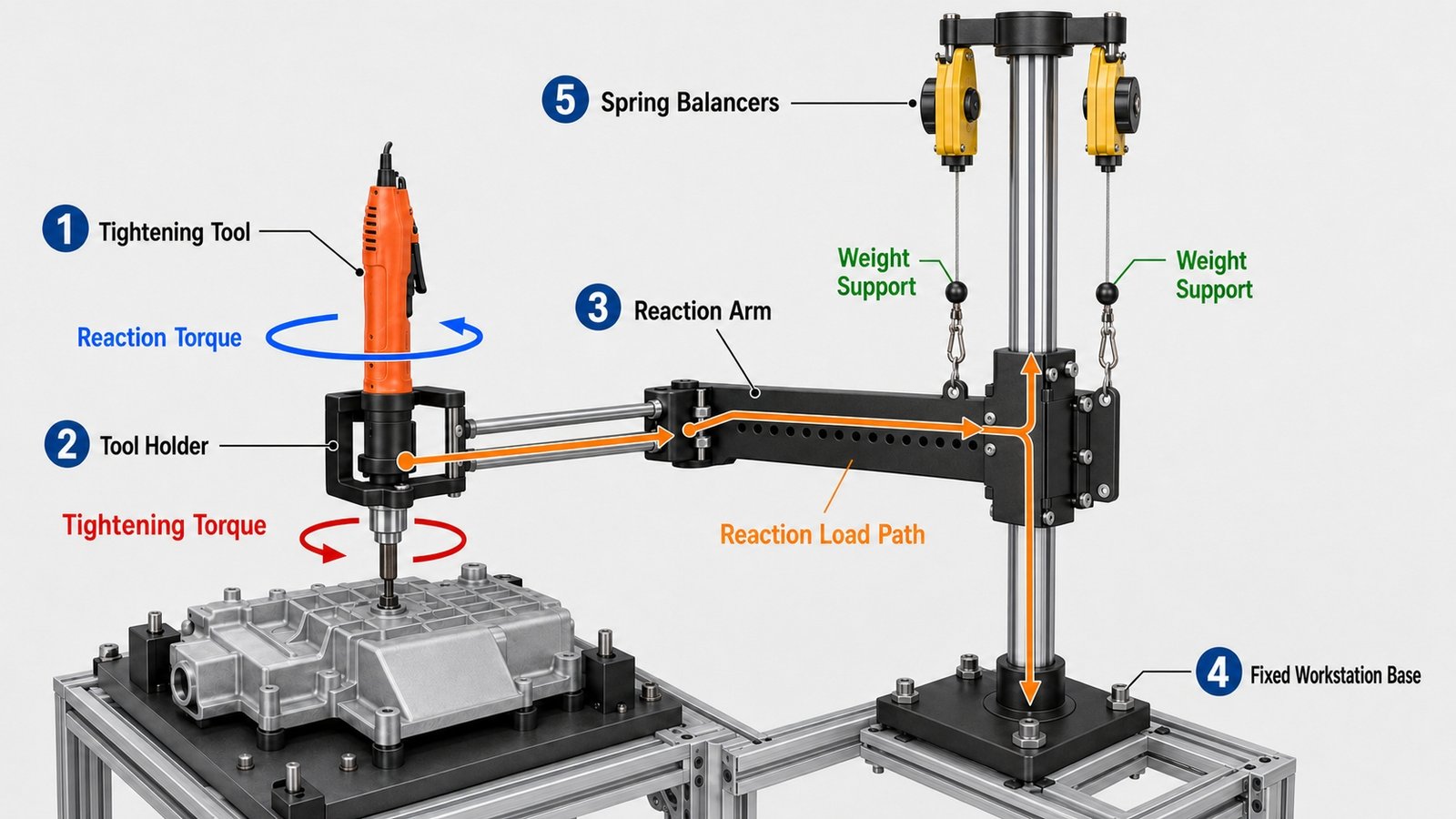
A torque reaction arm works by creating a mechanical load path between the tightening tool and a fixed workstation structure. The operator can move and position the tool, but when tightening torque is applied, the arm carries most of the opposing reaction load instead of allowing it to act directly on the operator.
The process can be divided into five basic stages:
1. The tool is moved to the fastening point
The operator guides the supported tightening tool to the required bolt or screw position. Articulated joints, linear guides, or telescopic structures allow the tool to move within the designed working range.
2. The tightening tool applies torque
When the tool spindle rotates the fastener, an opposing reaction torque acts on the body of the tool.
3. The tool holder receives the reaction load
A rigid holder or adapter connects the tool body to the reaction arm. The rotating output spindle remains free to tighten the fastener, while the tool housing is restrained by the holder.
4. The arm transfers the load to the mounting base
The reaction torque passes through the tool holder, arm members, joints, guides, and mounting structure. It is ultimately transferred into a workbench, column, floor base, wall mount, or gantry frame.
5. The operator moves to the next fastening point
After tightening is completed, the operator repositions the supported tool. A spring balancer or pneumatic balancing system may compensate for tool weight and make repeated movement easier.
The spring balancer and the torque reaction arm perform different functions. The balancer mainly compensates for the weight of the tool and moving arm components, while the arm structure resists and transfers reaction torque. Optional position sensors can monitor arm movement, but they do not replace the mechanical structure responsible for absorbing the reaction load.
What Is a Torque Reaction Arm Used For?
A torque reaction arm is used to manage the opposing torque generated by an electric or pneumatic tightening tool. Instead of requiring the operator to resist most of this reaction load manually, the arm transfers it through a mechanical structure to a fixed workbench, column, floor base, or gantry frame.
Its main purposes include:
Transferring Reaction Torque
The tool holder receives the opposing torque from the tightening tool and transfers it through the arm structure to the fixed mounting base. This reduces the reaction load acting directly on the operator.
Supporting the Tightening Tool
The arm supports the tool within a defined working range. When combined with a spring balancer or another weight-compensation system, it can also reduce the effort required to hold and reposition the tool.
Improving Tool Stability
Mechanical support helps reduce sudden tool movement when the fastener approaches its target torque. It can also help the operator maintain a more stable tool position during repetitive fastening.
Reducing Operator Fatigue
Repeatedly resisting reaction torque can place strain on the wrist, arm, and shoulder. Transferring the reaction load to a fixed structure can make high-frequency and higher-torque fastening tasks more manageable.
Supporting Position and Process Verification
When position sensors and a workstation controller are added, the arm can help verify whether the tool has reached the intended fastening point. Depending on the configuration, it may also support tightening-sequence guidance, missed-point detection, and assembly error-proofing.
A torque reaction arm does not determine the final tightening torque by itself. Torque accuracy still depends on the tightening tool, controller, calibration, fastening program, and joint condition.
Types of Torque Reaction Arms
Torque reaction arms are available in different structural configurations to accommodate varying tool movements, torque requirements, working ranges, and workstation layouts. The following types describe how the arm moves and supports the tightening tool, but they are not always mutually exclusive. A single torque arm system may combine linear, articulated, telescopic, or folding features.
Linear Torque Reaction Arms
A linear torque reaction arm uses guides, rails, or sliding structures to control tool movement along a defined path. The guided structure provides stable mechanical support and transfers reaction torque directly to the mounting point.
Linear arms are suitable for repetitive fastening tasks where the tool follows a predictable movement path. Depending on the design, the tool may move horizontally, vertically, or along multiple guided axes while remaining mechanically supported.
This structure is commonly used where rigidity, repeatable movement, and higher torque capacity are more important than unrestricted tool positioning.
Articulated Torque Reaction Arms
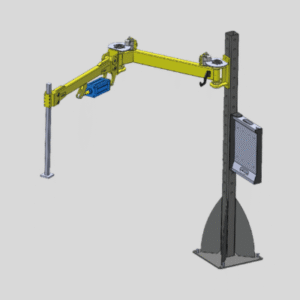
An articulated torque reaction arm uses one or more rotating joints to allow the tightening tool to move between different fastening points. The joints provide a wider and more flexible working area than a purely linear structure.
Articulated arms are suitable for workpieces with multiple fastening locations, varying tool angles, or more complex movement paths. The operator can reposition the tool while the arm continues to support its weight and transfer reaction torque to the fixed mounting structure.
The number of joints, folding direction, working radius, and torque capacity should be matched to the workstation layout.
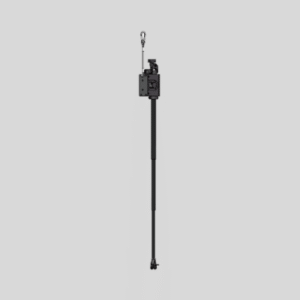
Telescopic Torque Reaction Arms
A telescopic torque reaction arm uses sliding tubes or guide rods that extend and retract to provide an adjustable working reach. This allows the operator to move the tightening tool closer to or farther from the mounting point without repositioning the entire workstation.
Telescopic structures are useful when fastening points are distributed across workpieces of different sizes or when the required reach changes during the assembly process. Carbon-fiber or lightweight metal components may be used to reduce the moving mass of longer arm structures.
A telescopic arm may also incorporate articulated joints or position sensors, depending on the required movement and process-control functions.
Folding and Side-Mounted Torque Reaction Arms
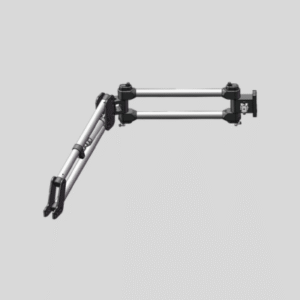
Folding torque reaction arms use hinged structures that can extend during operation and retract when not in use. Side-mounted configurations install the main arm structure beside the workstation instead of directly above or behind the workpiece.
These designs are suitable for workstations with limited vertical clearance, restricted installation space, or a requirement to keep the area above the workpiece accessible. Folding movement can also make it easier to store the tool outside the active assembly area between operating cycles.
Depending on the application, folding and side-mounted structures may be combined with linear guides, telescopic sections, or tool-balancing devices.
These classifications describe the movement and structure of the arm. Installation methods—such as bench-mounted, wall-mounted, floor-mounted, overhead, or gantry-mounted—represent a separate selection factor and may be combined with different arm structures.
Applications of Torque Reaction Arms
Torque reaction arms are used in assembly operations where tightening tools generate noticeable reaction torque, require frequent repositioning, or need to move between multiple fastening points. The appropriate arm structure depends on the tightening torque, tool weight, working range, installation space, and process-control requirements of each application.
Automotive and E-Mobility Assembly
Automotive assembly lines use torque reaction arms for repetitive fastening tasks involving engines, transmissions, electric drive units, battery systems, seats, chassis components, and other vehicle assemblies.
Depending on the workstation, the arm may support multi-point tool movement, higher tightening torque, or position-based fastening verification. Sensor-equipped configurations can also help confirm whether the tool has reached the intended fastening point before or during tightening.
Electronics and Appliance Assembly
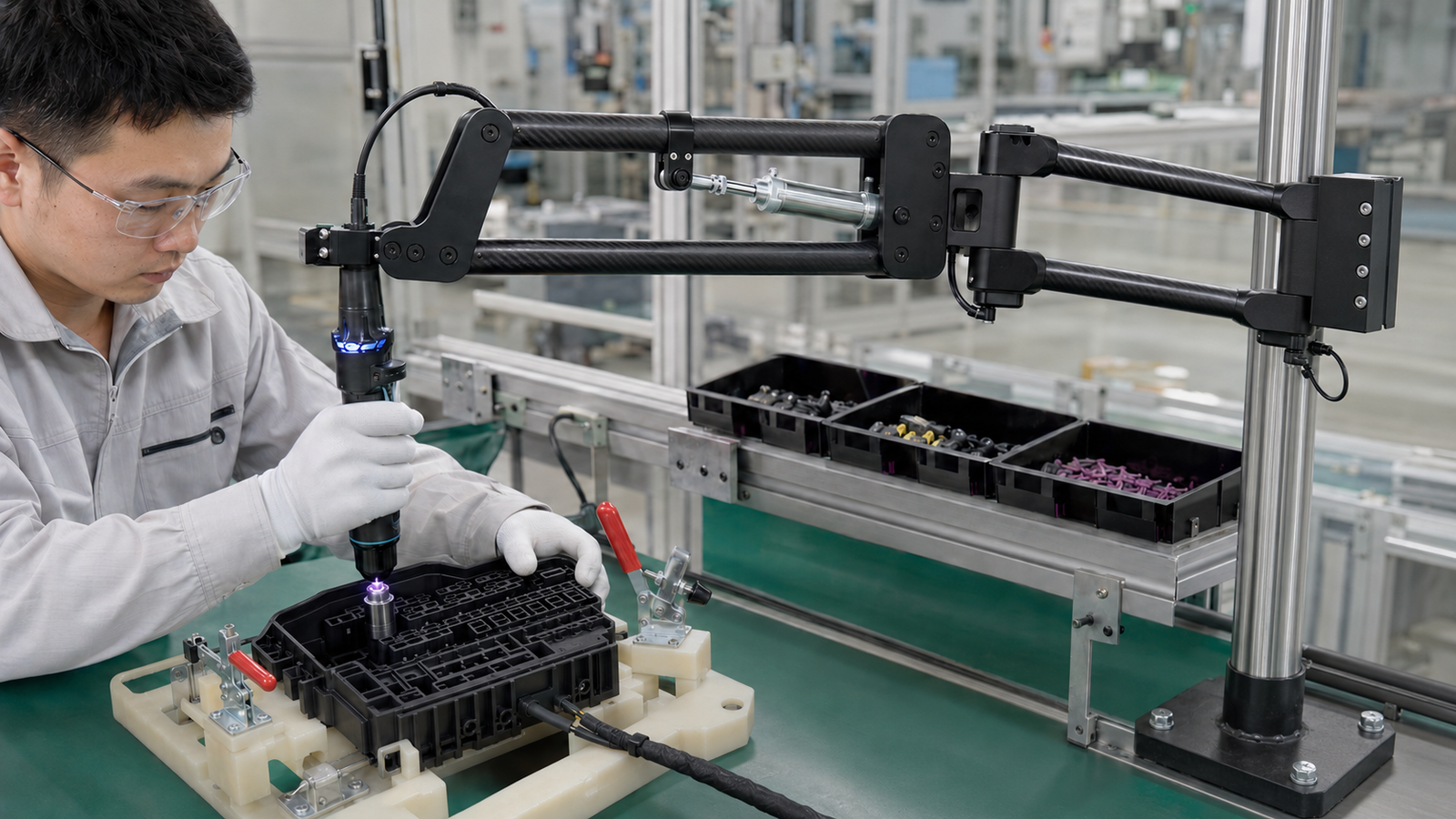
Electronics and appliance production often involves lower tightening torque but a high number of repeated fastening cycles. Even at relatively low torque levels, repeatedly holding and repositioning an electric screwdriver can contribute to operator fatigue.
Compact, lightweight, or side-mounted torque reaction arms can support the tool while preserving access to small components and restricted assembly areas.
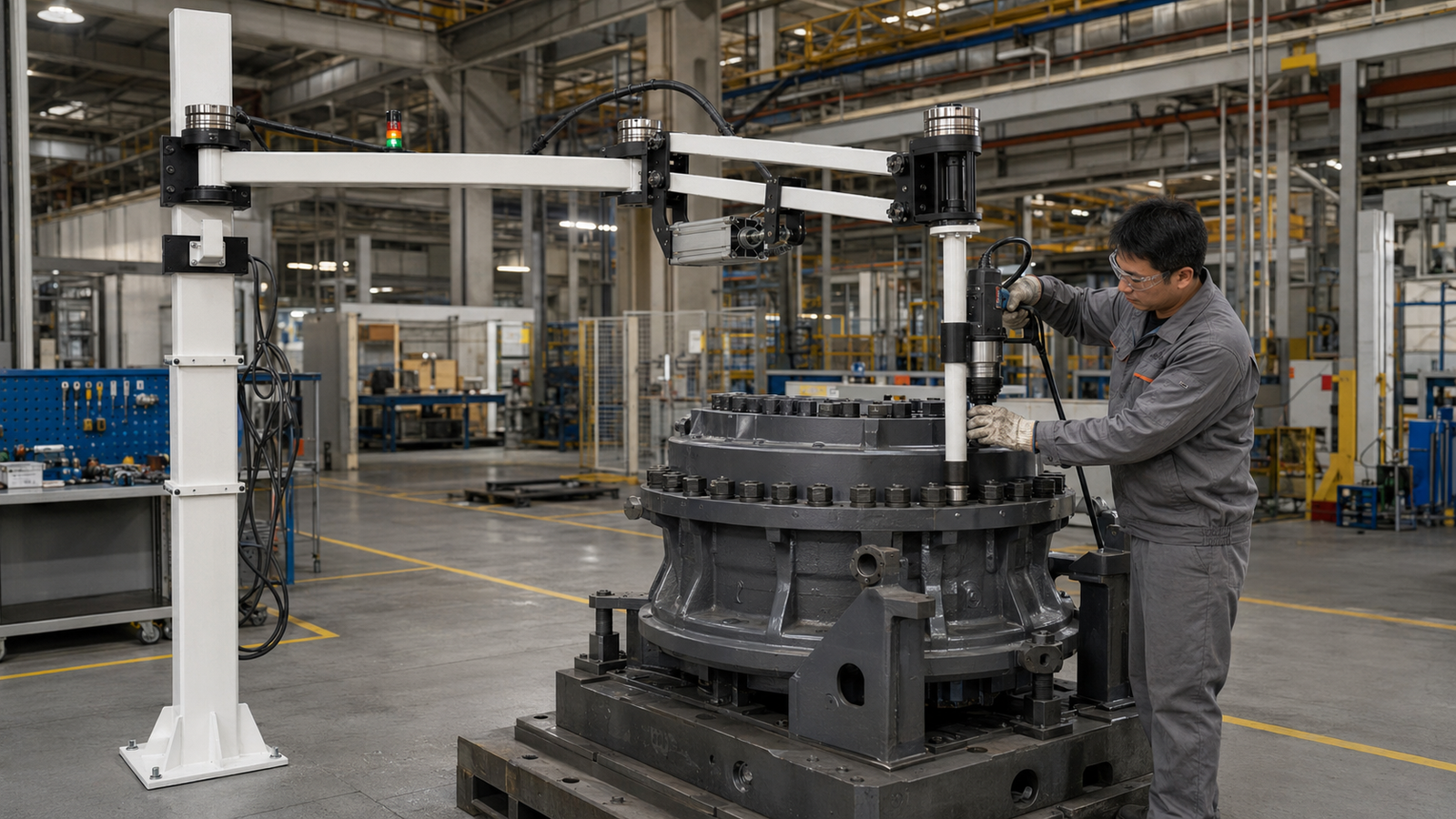
Heavy Machinery and Large Components
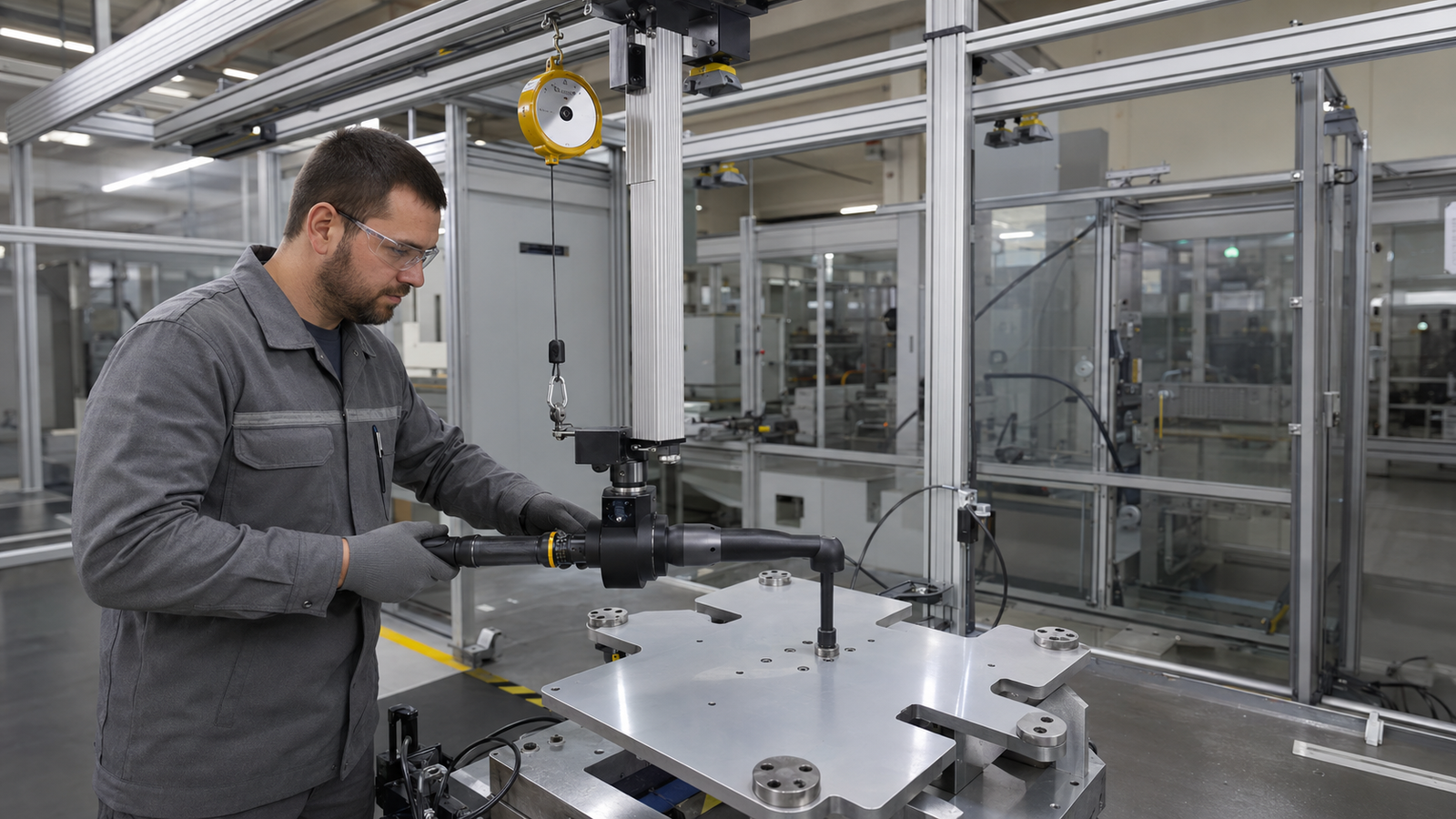
Heavy machinery, construction equipment, energy-storage systems, and large industrial components may require higher tightening torque, heavier tools, and a larger working range than standard bench-mounted assembly stations.
Heavy-duty linear, floor-mounted, or gantry-supported reaction arms can transfer higher reaction loads into a reinforced mounting structure. The final configuration must be selected according to the maximum tool output torque, tool weight, working radius, and installation conditions.
Aerospace and Precision Manufacturing
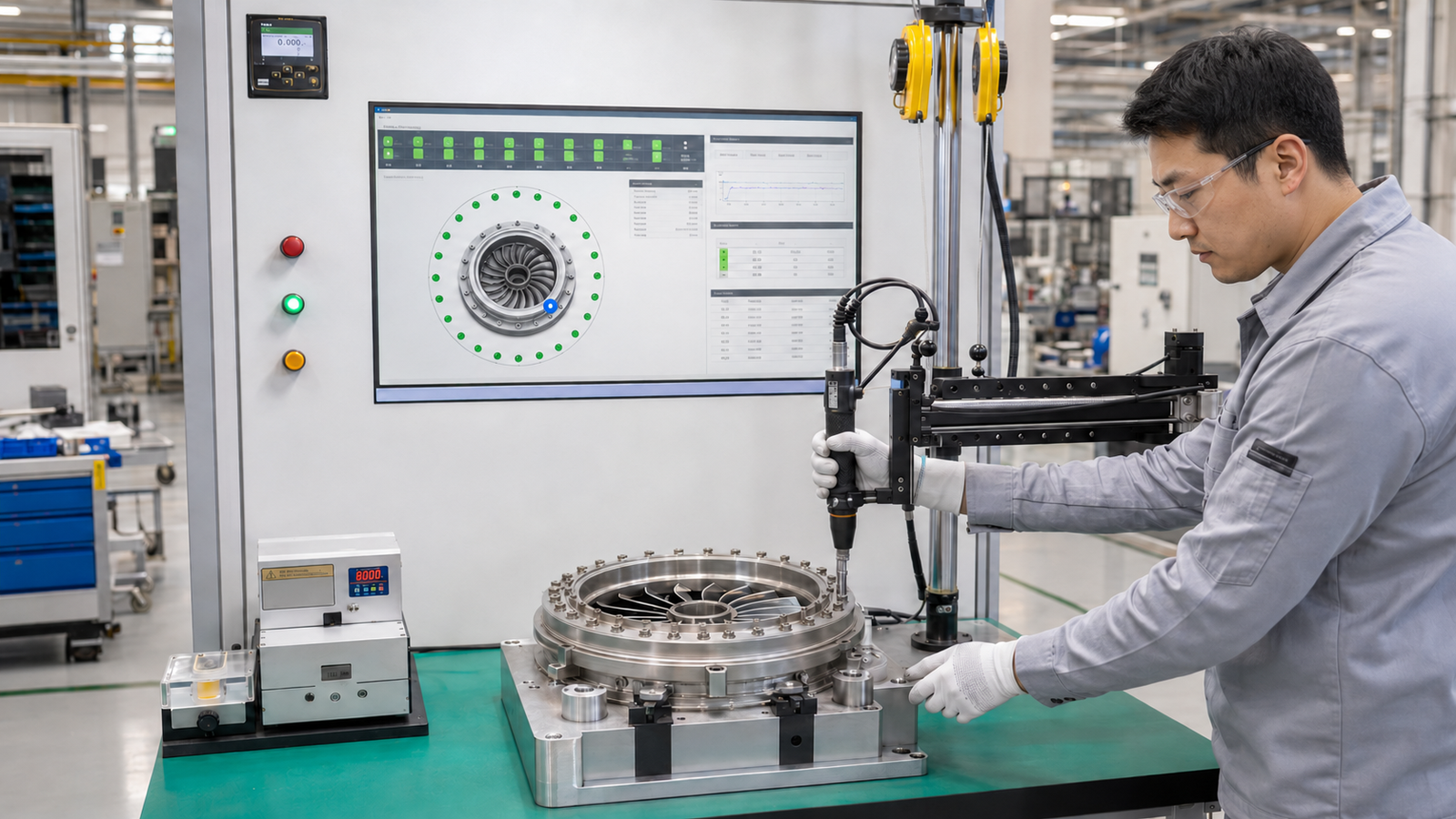
Aerospace and precision manufacturing applications often require stable tool positioning, controlled fastening sequences, and documented assembly results. A torque reaction arm can provide mechanical support and help maintain a more stable tool posture during repeated fastening.
A standard mechanical arm does not record tightening data by itself. Position verification and process traceability require additional sensors, a workstation controller, and data communication with the tightening tool or production system.
Multi-Product Assembly Workstations
In workstations that assemble different products or variants, operators may need to use multiple tightening programs, sockets, or fastening sequences. A position-sensing torque reaction arm can become part of a broader error-proofing system that helps verify tool position and guide the required assembly process.
Depending on the system design, it may work with program selectors, socket-selection devices, tower lights, tightening controllers, and manufacturing execution systems.
What Should You Consider Before Selecting a Torque Reaction Arm?
Maximum Reaction Torque
The torque reaction arm must be selected according to the maximum output torque of the tightening tool. Its rated capacity should cover the expected reaction load under actual operating conditions. Tool settings, joint conditions, working radius, and the required safety margin should all be considered.
Tool Weight and Balancing Requirements
Consider the total suspended weight of the tightening tool, socket, cable, and any accessories. A suitable balancing system can reduce the force required to lift and position the tool, but it does not replace the torque-supporting function of the reaction arm.
Working Range and Movement
Check the horizontal reach, vertical stroke, movement direction, and location of every fastening point. Linear, articulated, telescopic, folding, and gantry-supported arms provide different working envelopes.
Mounting Method and Workstation Structure
The reaction load must be transferred into a sufficiently rigid mounting structure. Depending on the workstation, the arm may be installed on a bench, column, floor base, side frame, or overhead gantry.
Position Verification and Process Control
If the application requires bolt-position verification, sequence control, or tightening-data traceability, additional sensors and a workstation controller may be required. These functions are not provided by a standard mechanical arm alone.
To compare suitable configurations for your assembly station, explore KURAN’s torque reaction arm models by torque capacity, working range, mounting method, and position-control requirements.
Frequently Asked Questions About Torque Reaction Arms
What problem does a torque reaction arm solve?
When a tightening tool applies torque to a fastener, an equal reaction torque acts in the opposite direction. Without mechanical support, the operator may need to resist this force through the hands, wrists, arms, and shoulders. A torque reaction arm transfers the load through its structure and into a rigid mounting point.
KURAN provides different structures for different workstations. The KR001 dual-axis arm is intended for conventional fixed stations, the KR008 side-mounted arm fits work areas with limited radial or vertical space, and the KR010 gantry system provides movement across larger assembly areas. Although their movement patterns differ, they all transfer reaction torque away from the operator and into the supporting structure. KURAN torque-arm options
Does a torque reaction arm control tightening torque?
No. A mechanical torque reaction arm does not generate, measure, or regulate tightening torque. The tightening tool and its controller remain responsible for applying and measuring torque and angle. The arm must simply be rated to withstand the resulting reaction load.
In a KURAN position-controlled workstation, sensors on the arm can report tool position to the KR002-B01 field controller, which manages fastening programs, points, and sequences. The KR002-H01 supervisory controller can then support centralized monitoring and tightening-data traceability. These electronic functions complement the arm, but they do not change the arm itself into a torque-measuring device. KR002-B01 controller, KR002-H01 controller
Is a torque reaction arm the same as a spring balancer?
No. A spring or tool balancer mainly offsets the weight of the tool, making it easier to raise, lower, and reposition. A torque reaction arm resists rotational reaction force and transfers it into the workstation structure.
Some KURAN systems combine both functions. For example, the KR001 uses a spring balancer to support the combined weight of the tool and arm, while its mechanical structure carries the reaction torque. The KR008 uses a pneumatic balancing system for smoother vertical handling, while its carbon-fiber arm and mounting structure resist reaction loads up to 100 Nm. KR001 specifications, KR008 specifications
Does a torque reaction arm improve tightening accuracy?
A reaction arm does not increase the calibrated torque accuracy of the tightening tool. However, it can stabilize the tool, reduce unwanted movement, and help maintain better socket alignment and tool posture during repeated fastening.
For applications requiring additional process control, selected KURAN arms are available with XY or XYZ position detection. When connected to a KR002 controller, the workstation can verify whether the tool has reached the correct fastening point and whether the required sequence has been followed. This improves process consistency and error detection, while torque accuracy still depends on the tightening tool and its calibration.
What tightening tools can be used with a torque reaction arm?
Torque reaction arms are commonly used with electric nutrunners, pneumatic tightening tools, transducerized tools, straight spindles, and angle-head tools. Compatibility depends on maximum torque, tool weight, dimensions, center of gravity, output direction, and the position of cables or air hoses.
KURAN’s KR005 tool adapters provide a secure mechanical connection between the tightening tool and reaction arm. Adapter configurations can be selected or customized for different tool bodies, helping maintain correct alignment and allowing a wider range of tools to be integrated into the workstation. KR005 tool adapters
How much torque can a torque reaction arm handle?
Torque capacity depends on the arm’s structure, materials, working radius, joints, mounting method, and operating direction. Selection should be based on the tool’s maximum configured output rather than only its normal working torque. The tool must not be operated above the arm’s rated reaction capacity.
KURAN currently provides published options covering light assembly through ultra-high-torque applications:
- KR011: up to 10 Nm for small components, electronics, and confined precision workstations;
- KR001: 25, 50, and 100 Nm configurations for conventional industrial assembly;
- KR007: 150, 300, 500, and 1,000 Nm configurations for high-torque linear applications;
- KR009: 500, 1,000, 2,000, and 5,000 Nm configurations for large machinery and heavy-duty floor-mounted applications.
These values are rated configurations, not a continuous adjustment range. Final selection must also account for tool weight, working radius, mounting rigidity, tightening direction, and application-specific safety requirements. KR007 specifications, KR009 specifications, KR011 specifications
Can one torque reaction arm be used with different tools or products?
Possibly. One arm may support different tools when its torque capacity, payload, working range, and holder interface remain suitable. It may also serve multiple product variants when every fastening point remains within the arm’s movement envelope.
KURAN can use KR005 adapters to connect different tightening tools, while the KR002-H01 supervisory system supports multiple programs and fastening-point configurations. However, each new tool or product setup should be rechecked because changes in torque, weight, center of gravity, socket length, or bolt layout may affect arm loading and accessibility.
Does every torque reaction arm require position sensors?
No. A sensor-free mechanical arm can support the tool and transfer reaction torque without electronic position detection. Sensors are only needed when the workstation must verify fastening positions, control a tightening sequence, or support error-proofing and traceability.
KURAN offers both positioning and non-positioning configurations on several models, including KR001, KR006, and KR008. When position control is required, arm sensors can send movement or coordinate signals to a KR002 controller, which compares the detected position with the programmed fastening point and process sequence.
Can a torque reaction arm be added to an existing workstation?
In many cases, yes. Before retrofitting, the existing station must be evaluated for mounting rigidity, available space, working height, fastener coverage, cable routing, fixture interference, and possible pinch points. A standard workbench may require reinforcement before it can safely receive reaction loads.
KURAN offers different installation structures for retrofit conditions. The KR008 is intended for compact side-mounted layouts, while the KR012 supports side, column, or top mounting with a reach of up to two metres. Higher-load applications may require a separate KR009 floor-mounted structure, while wide assembly areas may be better suited to a customized KR010 gantry system. KR012 mounting options, KR010 gantry system
What information is needed to select a torque reaction arm?
Selection normally requires the tightening-tool model, maximum configured torque, tool weight and dimensions, socket length, fastener positions, tightening direction, required reach, vertical movement, available mounting space, and workstation structure. Position verification, sequence control, and traceability requirements should also be defined in advance.
For a KURAN application review, it is useful to provide workstation photographs or drawings, the complete bolt layout, tool specifications, product variants, cycle requirements, and the preferred mounting location. This information helps determine the appropriate KURAN model, torque rating, working radius, tool adapter, balancing method, sensor configuration, and controller requirements.
Conclusion
A torque reaction arm is a mechanical support system that transfers reaction torque from a tightening tool into a rigid mounting structure. It can also support the tool’s weight, improve positioning stability, reduce operator fatigue, and make repeated fastening work more consistent.
The appropriate configuration depends on the tool’s maximum torque and weight, the required working range, fastening-point layout, mounting conditions, and process-control requirements. A mechanical reaction arm does not control tightening torque or record assembly data by itself; these functions require a compatible tightening system, sensors, and workstation controller.