
Introduction
Wrong torque selection is a common but often underestimated problem in assembly operations. Even when manufacturers use electric tightening tools capable of precise torque control, fastening defects may still occur if the operator selects the wrong program, uses the wrong socket, or applies the correct torque to the wrong fastening position. This risk becomes even higher in multi-product assembly lines, where different product models, bolt specifications, torque parameters, and tightening sequences are often handled at the same workstation.
If the torque is too low, the joint may loosen during vibration or long-term use. If the torque is too high, it may cause thread damage, fastener failure, or part deformation. Therefore, avoiding wrong torque selection should not rely only on operator memory or paper-based work instructions. Instead, manufacturers need to connect the product model, tightening program, tool accessory, fastening position, and tightening result before the operation starts.
What Is Wrong Torque Selection?
Wrong torque selection does not only mean that the operator enters an incorrect torque value. In real assembly operations, it usually refers to a mismatch between the tightening program, tool accessory, product model, or fastening position. In other words, the tool itself may operate normally, and the torque output may comply with a certain program setting, but that program may not be suitable for the current product or the current bolt.
Selecting the Wrong Tightening Program
In multi-product assembly lines, different products often require different tightening parameters. If the operator selects the wrong program on the tool or controller, the tightening tool may still output torque normally, but it may apply the wrong torque or angle parameter to the current bolt. This type of error commonly occurs at workstations where product changeovers are frequent, program numbers are numerous, or operators need to manually select programs.
Using the Wrong Socket or Bit
Some assembly workstations require operators to change sockets or bits according to bolt specifications. If the operator selects the wrong tool accessory, the tightening process may suffer from poor fit, slipping, fastener damage, or inconsistency between the actual tightening result and the preset parameters. In this case, the problem does not necessarily come from the torque program itself, but from a mismatch between the tool accessory and the current tightening task.
Applying the Correct Torque to the Wrong Fastening Position
On the same product, different bolts may require different torque values. For example, some structural connection points may require higher torque, while plastic parts, thin-walled parts, or precision components may require lower torque. If the operator follows the wrong tightening sequence, the correct torque parameter may be applied to the wrong fastening position, which can still result in an assembly defect.
Using the Previous Product’s Torque Setting
In mixed-model production or rework stations, operators may fail to switch programs after changing products, causing the current product to continue using the torque parameters from the previous product. This type of error is highly hidden because the tool will still operate normally, and the operator may believe that the tightening process has been completed. However, the actual parameters used no longer meet the process requirements of the current product.
Why Wrong Torque Selection Easily Happens in Manual or Semi-Automated Assembly
In manual or semi-automated assembly environments, wrong torque selection is usually not caused by a single factor. It is often the result of product variation, program management, tool accessories, production rhythm, and on-site management methods working together. This is especially common in high-mix, low-volume, or mixed-model production scenarios, where operators need to complete product identification, program switching, tool selection, and position confirmation within a short time. If any step lacks effective verification, the wrong torque may be used.
Too Many Product Models and Tightening Parameters
When one assembly line produces multiple product models, different products may correspond to different bolt specifications, torque ranges, angle requirements, and tightening sequences. Even if these parameters are written into the work instructions, operators still need to identify and switch between them during actual operation. If there are too many program numbers, or if the differences between products are not obvious, the risk of selecting the wrong program increases significantly.
Over-Reliance on Operator Memory
Many manufacturers use training, process cards, or SOPs to remind operators to select the correct torque. However, these methods still depend on human attention and memory. In high-speed production, night shifts, new operator onboarding, personnel rotation, or rework stations, it is difficult for operators to maintain fully consistent judgment at all times. As long as the system does not verify the operation before tightening starts, errors still have a chance to occur.
Product Identification Is Not Linked to the Tightening Program
In some assembly workstations, product QR codes, work order information, and tightening tool programs are separated. Although the operator may know the current product model, they still need to manually select the program on the tool or controller. This creates a gap between product identification and program calling. Once the operator forgets to switch programs or selects a similar program number, the current product may use the wrong torque parameters.
Lack of Error-Proofing for Sockets and Bits
Wrong torque selection does not only occur at the program level. It can also occur at the tool accessory level. For workstations that require frequent socket or bit changes, if accessories are simply placed on a tool rack without selection verification or pick-up guidance, the operator may choose the wrong specification. Even when the tool program is correct, the wrong accessory may still lead to unstable tightening, fastener damage, or abnormal assembly results.
Lack of Real-Time Confirmation Before Tightening
Many assembly problems are only discovered after tightening has been completed through inspection, rework, or customer feedback, rather than being prevented before the operation starts. For wrong torque selection, the key issue is not whether the error can be found afterward, but whether the system can confirm before tightening that the current product, program, accessory, and position are all matched. Without this real-time confirmation mechanism, the wrong operation may continue to the next process, increasing traceability and rework costs.
What Are the Consequences of Using the Wrong Torque?
The impact of wrong torque selection may not be immediately visible during assembly. Some problems may be found during testing, while others may gradually appear during transportation, long-term operation, or customer use. For critical joints, wrong torque not only increases rework and scrap costs, but may also affect product reliability, service life, and safety.
Under-Tightening Causes Joint Loosening
When the actual torque is lower than the process requirement, the fastener cannot provide sufficient clamping force. After the product operates under vibration, impact, or temperature changes for a period of time, the joint may gradually loosen. In mild cases, this may lead to abnormal noise, increased gaps, or functional issues. In severe cases, it may cause part detachment, sealing failure, or structural connection failure.
Over-Tightening Causes Thread or Part Damage
When the actual torque is higher than the process requirement, the fastener and the assembled parts may be subjected to excessive stress. For metal parts, over-tightening may cause thread stripping, thread damage, or bolt yielding. For plastic parts, thin-walled parts, or precision components, excessive torque may also cause cracking, deformation, or damage to the mounting surface. These damages may not appear as obvious defects immediately, but they can reduce long-term product reliability.
Correct Parameters Used at the Wrong Position Cause Hidden Defects
In complex assembly processes, different fastening positions may have different torque requirements. If the operator applies the program for one position to another position, the tool may still show that tightening has been completed, but the actual joint condition does not meet the process requirement. This type of issue is harder to identify than a simple tool alarm because it appears to be a “normally completed” operation.
Increased Rework, Downtime, and Quality Traceability Costs
Once a batch of products is suspected of having used the wrong torque, manufacturers usually need to reinspect the related batch or even disassemble and rework the products. Without complete tightening data records, quality personnel may find it difficult to determine which product, fastening position, shift, or operation step caused the problem. As a result, the inspection scope expands, rework costs increase, and the production rhythm may also be affected.
Impact on Customer Trust and Supplier Quality Evaluation
In industries such as automotive parts, battery packs, electric drive systems, 3C products, and industrial equipment, tightening quality often directly affects how customers evaluate a supplier’s process control capability. If wrong torque problems occur repeatedly, customers may require additional inspection, corrective action reports, or even a reassessment of supplier quality capability. Therefore, avoiding wrong torque selection is not only an on-site process issue, but also a supply chain quality management issue.
Basic Methods to Reduce Wrong Torque Selection
Before introducing an intelligent error-proofing system, manufacturers usually first use process standardization and on-site management to reduce the probability of wrong torque selection. These methods are necessary for standardizing operating procedures, unifying process requirements, and reducing basic errors. However, they are mainly “reminder” and “management” methods, and they cannot completely prevent errors from happening.
Standardize Torque Parameters
Manufacturers should first establish clear torque parameter standards by matching product models, bolt specifications, fastening positions, torque ranges, angle requirements, and tightening sequences. The clearer the parameter table is, the easier it is for operators and process engineers to stay consistent during operation, training, and problem analysis. For multi-product assembly workstations, it is especially important to avoid using similar but not identical program numbers for different products, as this can easily cause program misselection.
Use Clear Work Instructions
Visual SOPs, fastening position diagrams, color labels, and step-by-step operating instructions can help operators quickly understand which program, which socket, and which tightening sequence should be used for the current product. Compared with text-only instructions, visual work instructions are more suitable for assembly sites, especially for new operator training, complex product changeovers, and multi-position tightening workstations.
Manage Tools, Sockets, and Bits by Area
Tool accessories used for different torque ranges, bolt specifications, or product models should be physically separated whenever possible. For example, manufacturers can use dedicated tool racks, color labels, numbered identifiers, or fixed storage positions to reduce the risk of mixing accessories. This can reduce the probability of operators selecting the wrong socket or bit, but it still depends on operators consistently following the tool handling rules.
Train Operators Regularly
Training remains an important method for reducing errors. Through training, operators can understand the purpose of different torque parameters, the consequences of wrong torque, and the program selection requirements during product changeovers. However, training cannot replace system verification. Even if operators have been trained, judgment errors may still occur during high-speed production, fatigue, rework handling, or temporary personnel replacement.
Establish First-Piece Confirmation and Process Inspection
During product changeovers, program adjustments, or new batch production, first-piece confirmation can help manufacturers identify whether the parameter setup is correct. Process inspection can also help detect abnormal trends to some extent. However, these methods are usually post-operation checks and cannot guarantee that every tightening operation is completed with the correct program, correct accessory, and correct position.
Overall, basic management methods can reduce the probability of errors, but they cannot eliminate errors from the mechanism level. For assembly lines with many product models, many fastening positions, frequent program changes, or high traceability requirements, manufacturers should further consider a systematic tightening error-proofing solution.
Why Manual Checks Are Not Enough for Modern Assembly Lines
Manual checks, paper-based SOPs, and operator training can help manufacturers reduce errors, but they are difficult to rely on for ensuring that every tightening operation fully meets process requirements. Modern assembly lines are characterized by fast product changes, high cycle time requirements, multiple fastening positions, and frequent program switching. Once key steps still depend on human judgment, wrong torque selection becomes difficult to completely avoid.
Manual Checks Depend on Attention, and Attention Is Not Stable
At the beginning of a shift, operators can usually confirm the product, program, and tool accessory according to requirements. However, after long periods of repetitive work, high-speed production, or night-shift operation, attention decreases. Even when the SOP is clear, operators may overlook a confirmation step due to fatigue, habitual operation, or temporary abnormal handling. For the tightening process, one wrong program selection may be enough to create a quality risk for the entire product.
Paper-Based SOPs Can Remind, But Cannot Prevent Errors
Paper-based work instructions, process cards, and fastening position diagrams can tell operators what to do, but they cannot determine whether the operator actually did it correctly. For example, an SOP can specify which torque program should be used for a certain product, but if the operator does not switch the program, the paper document itself will not trigger an alarm or stop the tool from continuing. Therefore, SOPs are more suitable as operation references than as error-proofing control methods.
Ordinary Electric Tools Cannot Determine Whether the Current Product and Position Are Correct
Electric tightening tools can output torque and angle according to preset programs. However, if they are not linked with product identification, position detection, or tool accessory selection systems, they cannot confirm whether the current program is suitable for the current product. In other words, the tool may accurately output 10 Nm, but it does not know whether the current bolt actually requires 10 Nm, 8 Nm, or 15 Nm. High tool accuracy does not mean the assembly process is error-free.
Post-Operation Inspection Cannot Replace Pre-Operation Error-Proofing
Many manufacturers use sampling inspection, reinspection, or rework inspection to find wrong torque problems, but these methods usually take place after tightening has been completed. If the error has already entered the next process, subsequent troubleshooting, disassembly, and rework costs will increase. For critical fastening points, the more effective control method is to confirm whether the conditions are correct before tightening starts, rather than detecting the problem after it has occurred.
Modern Assembly Lines Require Closed-Loop Control
To consistently avoid wrong torque selection, the assembly process needs to upgrade from “manual confirmation” to “system verification.” The system should not only know what the current product is, but also be able to call the corresponding tightening program, confirm whether the operator has selected the correct socket or bit, determine whether the tool has reached the correct position, and record the final tightening result. Only when the product, program, accessory, position, and data form a closed loop can wrong torque selection be intercepted before it occurs.
How an Intelligent Tightening System Prevents Wrong Torque Selection
To truly reduce the risk of wrong torque selection, the assembly process should not rely only on manual confirmation by operators. Instead, an intelligent tightening system should connect product identification, program calling, tool accessory selection, position confirmation, abnormal status feedback, and data recording. In this way, the system can determine whether the current conditions are correct before tightening starts, rather than discovering errors only after the product has moved to the next process.
Identify the Current Product or Workpiece
The first step in preventing wrong torque selection is to identify which product model is currently being assembled. For multi-product assembly lines, different products may correspond to different bolt quantities, fastening sequences, and torque programs. If the system cannot identify the current product, it cannot determine which tightening parameters should be used.
In practical applications, the current product can be identified through barcode scanners, product QR codes, work order information, RFID, or MES signals. Once the product is identified, the system can match it with the corresponding tightening process. This reduces the risk caused by manual judgment, handwritten records, or operators selecting programs from memory.
Automatically Call the Correct Tightening Program
After product identification, the system should call the corresponding tightening program based on the product model, process step, fastening sequence, or external control signal. This is especially important for workstations that handle multiple programs. When program numbers are similar, or when one product requires several different torque values, manual program selection can easily become a source of error.
Automatic program calling helps ensure that the tool uses the correct torque and angle parameters for the current task. Instead of asking the operator to remember which program should be used, the system uses predefined logic to select the correct parameters before the tightening process begins.
Guide the Operator to the Correct Fastening Position
Even when the correct program is selected, quality risks may still occur if the program is applied to the wrong fastening position. Therefore, an intelligent tightening system should also confirm whether the tool has moved to the required position before tightening is allowed.
In a positioning-based tightening process, the system can compare the current tool position with the preset fastening position. When the tool reaches the correct point, the system allows the operation to continue. If the tool is outside the permitted position range, the system can prompt the operator to adjust the tool position or restrict the next tightening action. This helps prevent the correct torque from being applied to the wrong bolt.
Verify the Correct Socket or Bit
Wrong torque selection can also be caused by incorrect tool accessories. For example, the current program may require a specific socket or bit, but the operator may select another specification. In this case, even if the tightening program is correct, the actual assembly result may still be unstable.
A socket or bit selection system can verify whether the operator has selected the correct accessory before tightening is allowed to continue. This is especially useful for workstations that frequently switch between multiple sockets, bits, or tightening tools. By adding accessory verification, the system reduces the risk of wrong accessory use, fastener damage, slipping, and abnormal tightening results.
Provide Prompts or Restrict Operation Under Abnormal Conditions
An effective error-proofing system should not only record errors after they happen. It should notify operators immediately when the current product, program, accessory, or fastening position does not match the process requirement. Depending on the workstation design, the system may use interface prompts, audible alarms, visual indicators, signal outputs, or operation restrictions to prevent the error from continuing.
Clear feedback is important for on-site operators. When the system shows OK, NG, waiting, or alarm status in a simple and visible way, operators can respond quickly without spending time interpreting complex instructions. This is especially valuable in high-cycle assembly workstations.
Record Tightening Data for Traceability
Preventing wrong torque selection requires both process control and result recording. For critical assemblies, manufacturers often need to know which product was tightened, which point was tightened, which program was used, what the actual torque and angle were, and whether the final result was qualified.
A complete tightening traceability system can record product ID, fastening position, program number, target torque, actual torque, angle, result, time, and other process information. When quality issues occur later, these records help manufacturers quickly trace the specific product and tightening process, instead of relying on operator memory, paper records, or large-scale batch inspection.
What Features Should You Look for in a Torque Error-Proofing System?
When evaluating a torque error-proofing system, manufacturers should not only focus on whether a single tool can output accurate torque. Instead, they should assess whether the entire tightening process can be effectively controlled. A system suitable for assembly operations should manage product identification, program calling, tool accessories, fastening position, status feedback, and data traceability at the same time, ensuring that every tightening operation is completed under the correct conditions.
Tightening Program Management Capability
The system should first have clear program management capability. For multi-product, multi-position, or multi-torque assembly workstations, the number of tightening programs is often large. If programs can only be selected manually by operators, the risk of misselection remains. A better approach is to automatically call the corresponding program through product identification, scanning, or external signals, reducing manual judgment.
During selection, manufacturers should check whether the system supports multiple program configurations, whether it can call programs according to product model, process step, or fastening sequence, and whether it is convenient to modify and maintain later. If product models on the line change frequently, the flexibility of program management will directly affect the actual performance of the system.
Position Identification and Position Error-Proofing Capability
Wrong torque selection is not always caused by selecting the wrong program. It may also occur when the correct program is used at the wrong position. Therefore, position error-proofing capability is critical. For multi-bolt and sequence-controlled assembly workstations, the system should determine whether the tool has reached the current required fastening position and provide prompts or operation restrictions when the position does not match.
If operators only follow the SOP and rely on memory for the sequence, skipping, missing, or tightening at the wrong position may still occur. A torque reaction arm with position detection can convert tool movement into data that the system can recognize, changing the tightening process from simply “outputting torque” to “outputting the correct torque at the correct position.”
Socket and Bit Selection Verification Capability
For workstations that require frequent socket or bit changes, accessory error-proofing is also important. If the operator selects the wrong socket, even when the program is correct, tightening instability or fastener damage may still occur. Therefore, the system should be able to identify or verify whether the current socket or bit matches the current tightening task.
In actual system selection, manufacturers should focus on whether the system supports socket selectors, bit selectors, locking mechanisms, pick-up guidance, or signal feedback. For critical workstations, it is better not to rely only on color labels or manual placement. The system should participate in accessory verification to reduce the possibility of wrong accessories entering the tightening process.
Compatibility with Existing Tools and Production Lines
Many manufacturers do not build tightening systems from scratch. They may already have electric tightening tools, PLCs, MES, barcode scanners, fixtures, or automated lines. Therefore, the compatibility of the torque error-proofing system is very important. If the system can only work with a single brand or a fixed structure, integration and retrofit costs may be high.
During selection, manufacturers should confirm whether the system can be compatible with existing tightening tools, whether it supports common I/O communication, analog signals, or digital signals, and whether it can be linked with barcode scanners, three-color lights, sensors, MES, or production line control systems. The stronger the compatibility, the easier it is to integrate the system into existing workstations without redesigning the entire production line.
Real-Time Status Feedback Capability
On-site operators need to quickly know whether the current tightening status is normal. Therefore, the system should provide clear real-time feedback, such as interface prompts, position cursors, OK/NG displays, alarm messages, three-color lights, or sound prompts. The more intuitive the feedback is, the easier it is for operators to correct abnormalities in time.
Especially in high-speed assembly workstations, clear lights, colors, and step-by-step guidance are often more effective than complex text prompts. A good error-proofing system should clearly tell operators which point to tighten next, which accessory to use, whether the current result is qualified, and how to respond when an abnormal condition occurs.
Data Recording and Traceability Capability
For assemblies with high quality requirements, the system should not only prevent errors, but also record every tightening result. Complete traceability data should usually include product ID, fastening position, program number, target torque, actual torque, angle, curve, result, time, and operation information.
These data are very important for daily quality management, customer audits, issue traceability, and process optimization. If a batch of products later develops quality issues, manufacturers can use the data to quickly confirm whether the issue is related to the tightening process, rather than expanding the inspection scope or relying on manual records.
Workstation Customization Capability
Assembly workstations vary greatly between manufacturers. Some workstations have limited space, while others require a large operating range. Some have low torque requirements, while others need to withstand high reaction torque. Some only need program selection error-proofing, while others require position control, accessory management, and data uploading. Therefore, a torque error-proofing system should not be evaluated only by its standard configuration, but also by whether it can be customized according to the actual workstation.
When discussing a solution, manufacturers should provide product type, torque range, number of bolts, fastening position layout, tool model, workstation space, whether MES connection is required, and whether data traceability is needed. Only after these details are clear can the supplier determine whether to use a controller, positioning arm, socket selector, bit selector, or a more complete intelligent tightening workstation solution.
How KURAN Helps Manufacturers Avoid Wrong Torque Selection
For assembly workstations involving multi-product production, multiple tightening programs, various sockets and bits, or critical fastening positions, avoiding wrong torque selection cannot rely on a single tool alone. It requires a complete tightening error-proofing solution. KURAN can combine intelligent controllers, positioning torque reaction arms, tool selectors, program selectors, status feedback devices, and data recording functions according to the customer’s product structure, torque range, workstation layout, and traceability requirements, helping manufacturers build a more stable tightening process control system.
Managing Tightening Programs with Intelligent Controllers
One of the most common risks in wrong torque selection is that the operator manually selects the wrong program. KURAN’s intelligent controllers can be used to manage tightening programs for different products, fastening positions, and process requirements, so program selection no longer depends entirely on manual judgment.

For multi-product assembly scenarios, the controller can work with scanning, work orders, or external signals to call the corresponding program. In this way, when the product model changes, the system can switch to the correct tightening parameters according to the preset logic, reducing the possibility of operator program selection errors. For workstations that require position guidance and data traceability, the upper-level controller solution can further manage the tightening workflow.
Confirming Fastening Position with Positioning Torque Reaction Arms
Wrong torque may come not only from incorrect program selection, but also from incorrect fastening position. KURAN’s positioning torque reaction arms can support tightening tools, absorb reaction torque, and detect tool position at the same time. The system uses position signals to determine whether the tool has reached the current required fastening position, preventing operators from using the correct program on the wrong bolt.
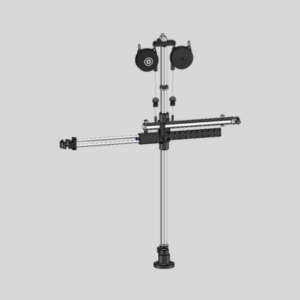
For multi-bolt and sequence-controlled assembly workstations, this position error-proofing capability is very important. It helps operators complete tightening according to the preset sequence and provides prompts or operation restrictions when the position does not match. In this way, the tightening process is not only about controlling torque output, but also about confirming “which torque is used at which position.”
Preventing Wrong Socket or Bit Selection with Intelligent Selectors
In many assembly sites, socket or bit errors can also lead to incorrect torque application. KURAN’s intelligent selector can be used for socket or bit pick-up error-proofing, helping the system confirm whether the current tool accessory matches the current tightening task.

When a certain fastening position requires a specific socket or bit, the system can guide the operator to select the correct accessory through indicators, signals, or linkage logic. If the operator selects the wrong accessory, the system can provide prompts or prevent the next operation. For workstations with higher bit management requirements, the locking bit intelligent selector can further reduce the risk of wrong bit usage.
Adapting to Multi-Program Workstations with Program Selectors
Not every workstation requires a complete upper-level control system. Some assembly workstations still need operators to switch programs manually, but they require clearer, more standardized, and more controllable program selection. For these scenarios, KURAN’s program selector can be used as an auxiliary device to quickly select the corresponding tightening program.

Compared with searching for programs directly on the tool or a complex interface, an independent program selector is more intuitive to operate and is suitable for workstations with multiple programs but relatively fixed process logic. It can help manufacturers reduce program number confusion, improve operator switching efficiency, and make it easier for on-site managers to label and standardize different programs.
Prompting Abnormal Status with Three-Color Lights and Interface Feedback
An error-proofing system needs to let operators quickly know whether the current operation is correct. KURAN’s three-color lights and control interface can display OK, NG, alarm, or waiting status, helping on-site personnel identify abnormalities in time.
For example, when the program has not been correctly switched, the accessory selection does not match, the tool has not reached the required position, or the tightening result is NG, the system can provide prompts through lights, the interface, or signal outputs. Compared with post-operation inspection, this real-time feedback allows errors to be found and handled faster on site, reducing the flow of defective products into the next process.
Achieving Quality Traceability Through Tightening Data Recording
For critical assembly workstations, manufacturers not only need to prevent errors, but also need to prove that every tightening process is controlled. KURAN’s intelligent control solution can record fastening positions, torque, angle, curves, results, and other data, and associate this information with product IDs or work order information.
When quality issues occur later, manufacturers can trace the specific product, specific fastening position, and specific tightening result based on the records. This not only helps narrow the investigation scope, but also provides data support for customer audits, process improvement, and quality analysis. For automotive parts, battery packs, electric drive systems, 3C products, and industrial equipment assembly, data traceability is often an important foundation for improving supplier quality management.
Providing Customized Combination Solutions Based on Workstation Requirements
Different assembly workstations face different wrong torque risks. Some workstations mainly have program selection errors, some mainly have socket or bit mix-up problems, and others need to solve position error-proofing, sequence control, and data traceability at the same time. Therefore, KURAN does not provide only a single product. It can combine different modules based on actual requirements.
If the customer only needs to prevent wrong socket selection, an intelligent selector can be prioritized. If the customer needs multi-program management, an intelligent controller or program selector can be configured. If the customer needs to confirm the position of each bolt, a positioning torque reaction arm can be configured. If full traceability is also required, data recording and system integration functions can be added. Through this modular combination, manufacturers can gradually build a more complete intelligent tightening error-proofing system according to current pain points and budget.
When Should You Upgrade from Manual Torque Selection to an Intelligent Error-Proofing System?
Not every assembly workstation needs to be immediately equipped with a complete intelligent tightening system. For workstations with a single product, few bolts, fixed torque parameters, and low quality risk, basic SOPs, tool separation, and operator training may already meet production requirements. However, if the production line already has frequent changeovers, complex parameters, or difficult traceability, relying only on manual torque selection will gradually become a quality risk.
One Production Line Assembles Multiple Product Models
If the same production line needs to assemble multiple product models, and different products have different bolt quantities, tightening sequences, or torque parameters, the risk of program misselection increases significantly. The more product models there are, the more information operators need to remember and judge. In this case, if operators still rely on manual product identification and manual program selection, errors are likely to occur during changeovers or shift changes.
One Workstation Requires Frequent Tightening Program Switching
When one workstation needs to frequently switch between multiple torque programs, the stability of manual selection decreases. This is especially true when program numbers are similar, parameter differences are small, or different programs correspond to different fastening positions. Even experienced operators may select the wrong program due to cycle time pressure or habitual operation. For these workstations, automatic program calling or program selection error-proofing is more reliable than training alone.
Many Socket or Bit Specifications Are Used and Easily Mixed
If one workstation needs to use multiple sockets, bits, or tool accessories, the risk of wrong torque selection does not only come from programs, but also from accessory mix-ups. Operators may select the correct program but pick up the wrong socket or bit, which still leads to tightening abnormalities. For workstations with many accessory types, manufacturers should consider using intelligent selectors, locking bit selectors, or pick-up guidance mechanisms for error-proofing management.
Missing Tightening, Wrong Tightening, Under-Tightening, or Over-Tightening Has Occurred Before
If the production line has already experienced missing tightening, wrong tightening, under-tightening, or over-tightening, it indicates that the existing management method may not be able to control the tightening process consistently. Even if the problem does not occur every day, as long as it happens at a critical joint, it may create high rework costs or customer quality risks. At this stage, manufacturers should focus not on “why the operator made another mistake,” but on “why the system allowed the error to continue.”
Customers Require Tightening Data Traceability
In industries such as automotive parts, battery packs, electric drive systems, industrial equipment, and 3C products, customers increasingly focus on process data and quality traceability. If customers require tightening records for each product and each bolt, manual records or sampling records usually cannot meet the requirement. Manufacturers need to record torque, angle, result, time, product ID, and fastening position through the system, so reliable data can be provided during quality audits or problem traceability.
Rework Costs Are High and Problem Investigation Is Difficult
If a wrong torque problem requires product disassembly, line stoppage, or expanded batch inspection once it occurs, manufacturers should consider error-proofing upgrades as early as possible. Without process data, quality personnel often cannot determine which product, workstation, fastening position, or operation step caused the problem, so they can only expand the inspection scope. The value of an intelligent tightening system lies not only in reducing errors, but also in narrowing the traceability scope when problems occur.
Existing SOPs and Training Cannot Consistently Eliminate Errors
If a manufacturer has already conducted repeated training, updated SOPs, and added inspection steps, but errors still occur repeatedly, the problem is no longer simply operator awareness. It means the process lacks a mandatory verification mechanism. Continuing to add training and inspections often increases management cost, but does not fundamentally prevent errors. A more effective approach is to let the system confirm whether the product, program, accessory, and position match before the operation starts.
Overall, as long as torque selection in the assembly process still depends on operator memory, manual switching, or post-operation inspection, and errors create obvious quality costs, manufacturers should consider upgrading from manual management to intelligent error-proofing. The goal of the upgrade is not to replace operators, but to help them complete the correct operation under system guidance and verification.
Conclusion
Wrong torque selection is not a simple operating mistake. It is the result of a lack of closed-loop control between product identification, program management, tool accessories, fastening positions, and data recording in the assembly process. As long as these steps still rely on operator memory and post-operation inspection, errors will be difficult to completely avoid.
For modern assembly lines, a more reliable method is to complete system verification before tightening starts: confirm whether the current product is correct, call the corresponding tightening program, check whether the socket or bit matches the task, determine whether the tool has reached the correct position, and record the final tightening result. In this way, wrong torque selection can be detected and intercepted before it occurs, rather than being exposed later through rework, inspection, or customer feedback.
If your assembly line is facing problems such as wrong program selection, socket or bit mix-ups, wrong fastening positions, missed tightening, under-tightening, over-tightening, or difficult tightening data traceability, KURAN can provide a suitable intelligent tightening error-proofing solution based on your product structure, torque range, workstation layout, tool model, and traceability requirements. Contact us and send your workstation requirements and assembly process information. We will help you evaluate the right configuration of controllers, positioning arms, intelligent selectors, and data traceability functions.