
HIGH-TORQUE SUPPORT · OPTIONAL POSITION DETECTION
KR007B High-Torque Linear Reaction Arm
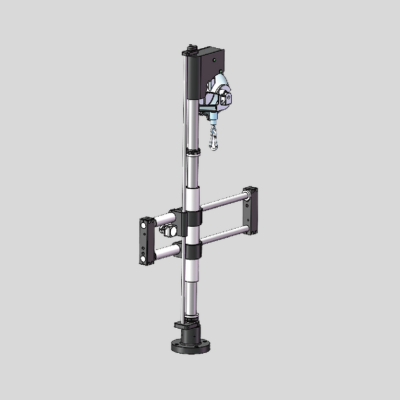
The KURAN KR007B combines a robust linear structure with spring-balanced tool support for high-torque tightening applications, with configurations rated up to 1000 Nm.
Choose a non-sensing version for mechanical support, or add XY / XYZ position detection to support fastening-point verification and sequence control when integrated with a compatible workstation controller.
- Up to 1000 Nm Reaction Torque Capacity
- Robust Linear Structure
- Spring Balancer Matched to Tool Weight
- Optional XY / XYZ Position Detection
DESIGN & PRACTICAL BENEFITS
KR007B Design Features and Practical Benefits
See how the KR007B structure supports your tightening tool, manages reaction torque, and accommodates optional position sensing for controlled assembly processes.
Robust Linear Structure
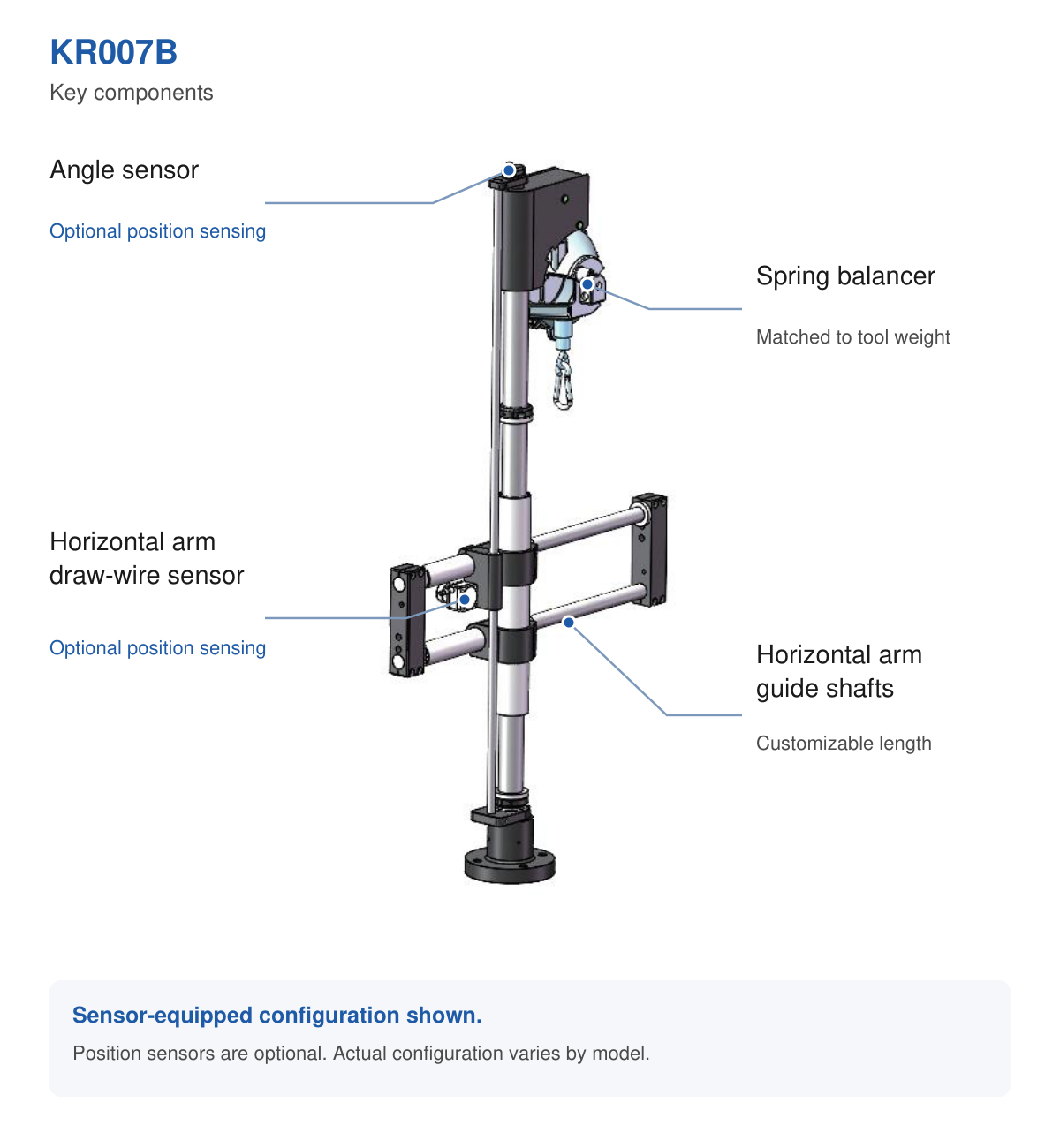
The column, horizontal guide shafts, and fixed base form a sturdy support structure. During tightening, the arm transfers reaction torque from the tool to the mounting structure, helping reduce the force the operator needs to resist.
Tool Weight Balancing
A spring balancer is matched to the combined weight of the tightening tool and its accessories. Proper balancing helps reduce the effort of holding and repositioning the tool during repetitive fastening operations.
Customizable Horizontal Arm Length
Horizontal arm length can be customized to suit your fastening-point layout and available space. Required reach, supported load, and reaction torque are reviewed together before the configuration is confirmed.
Optional Position Detection
Sensor-equipped configurations use position sensors to provide tool-position data. When connected to a compatible workstation controller, this data can support fastening-point verification and tightening sequence control. Sensors are optional.
SPECIFICATIONS & INSTALLATION
KR007B Technical Specifications and Dimensions
Compare the catalog models by reaction torque capacity, default load, position detection, and installation dimensions. Select a configuration below to view its specifications.
Non-Sensing Models
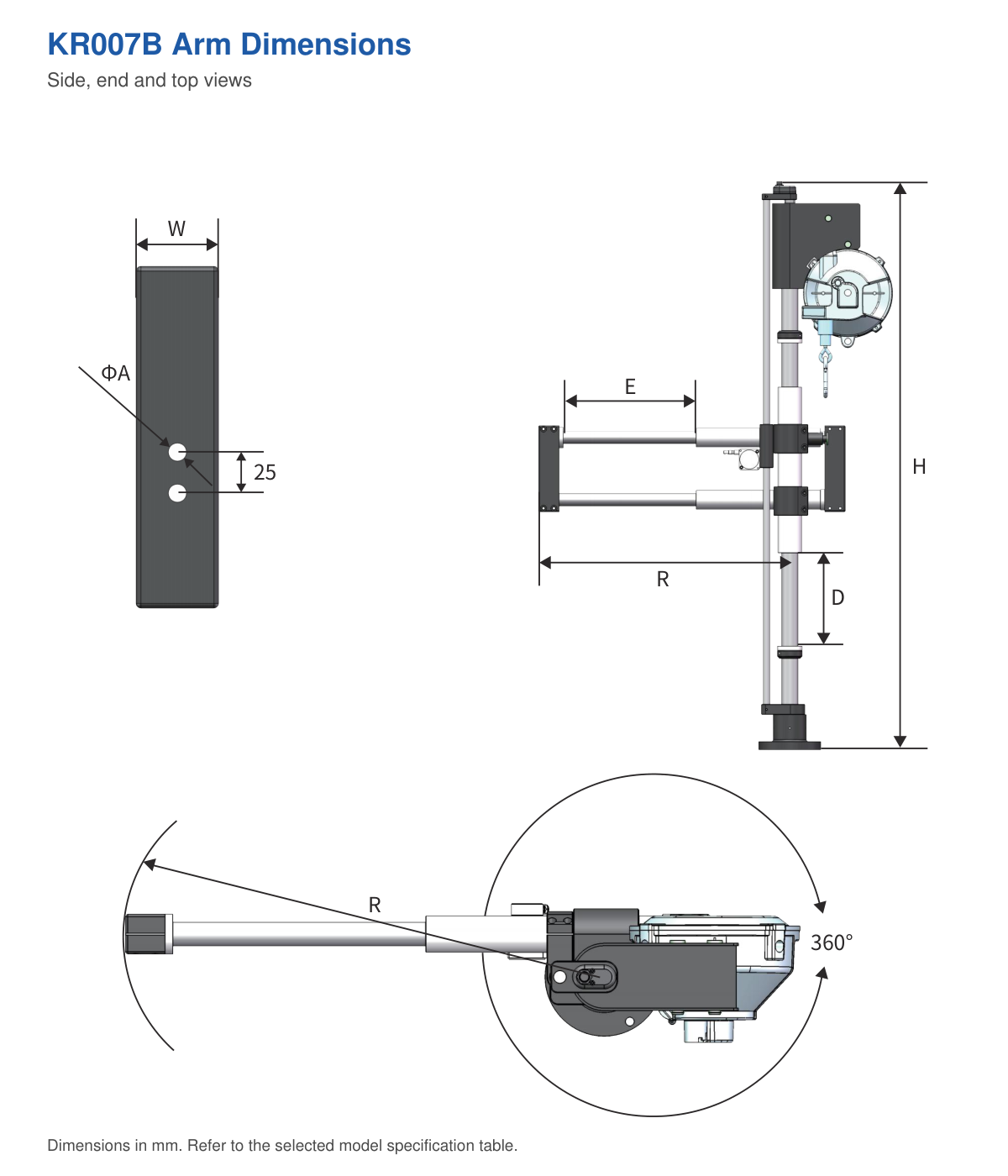
Mechanical support configurations without position sensors. All linear dimensions below are in millimeters.
| Model | Reaction Torque Nm | Default Load kg | Rmm | Emm | Dmm | Hmm | ØAmm | Wmm | Sensor Signal |
|---|---|---|---|---|---|---|---|---|---|
| KR007B-LN-150R480 | 150 | 12 | 480 | 260 | 400 | 1130 | 20 | 40 | None |
| KR007B-LN-300R530 | 300 | 16 | 530 | 280 | 370 | 1230 | 25 | 50 | None |
| KR007B-LN-500R570 | 500 | 20 | 570 | 320 | 440 | 1330 | 30 | 50 | None |
| KR007B-LN-1000R600 | 1000 | 20 | 600 | 350 | 310 | 1430 | 30 | 50 | None |
XY Position Detection Models
XY sensor configurations with analog or digital signal options. A: 0–10V analog output. S: RS485 digital communication.
| Model | Reaction Torque Nm | Default Load kg | Rmm | Emm | Dmm | Hmm | ØAmm | Wmm | Sensor Signal |
|---|---|---|---|---|---|---|---|---|---|
| KR007B-LM-150R480A | 150 | 12 | 480 | 260 | 400 | 1170 | 20 | 40 | A · 0–10V |
| KR007B-LM-150R480S | 150 | 12 | 480 | 260 | 400 | 1170 | 20 | 40 | S · RS485 |
| KR007B-LM-300R530A | 300 | 16 | 530 | 280 | 370 | 1270 | 25 | 50 | A · 0–10V |
| KR007B-LM-300R530S | 300 | 16 | 530 | 280 | 370 | 1270 | 25 | 50 | S · RS485 |
| KR007B-LM-500R570A | 500 | 20 | 570 | 320 | 440 | 1370 | 30 | 50 | A · 0–10V |
| KR007B-LM-500R570S | 500 | 20 | 570 | 320 | 440 | 1370 | 30 | 50 | S · RS485 |
| KR007B-LM-1000R600A | 1000 | 20 | 600 | 350 | 310 | 1470 | 30 | 50 | A · 0–10V |
| KR007B-LM-1000R600S | 1000 | 20 | 600 | 350 | 310 | 1470 | 30 | 50 | S · RS485 |
XYZ Position Detection Models
XYZ sensor configurations for processes that also require vertical position detection. Select the signal interface to match the workstation controller.
| Model | Reaction Torque Nm | Default Load kg | Rmm | Emm | Dmm | Hmm | ØAmm | Wmm | Sensor Signal |
|---|---|---|---|---|---|---|---|---|---|
| KR007B-LMZ-150R480A | 150 | 12 | 480 | 260 | 400 | 1170 | 20 | 40 | A · 0–10V |
| KR007B-LMZ-150R480S | 150 | 12 | 480 | 260 | 400 | 1170 | 20 | 40 | S · RS485 |
| KR007B-LMZ-300R530A | 300 | 16 | 530 | 280 | 370 | 1270 | 25 | 50 | A · 0–10V |
| KR007B-LMZ-300R530S | 300 | 16 | 530 | 280 | 370 | 1270 | 25 | 50 | S · RS485 |
| KR007B-LMZ-500R570A | 500 | 20 | 570 | 320 | 440 | 1370 | 30 | 50 | A · 0–10V |
| KR007B-LMZ-500R570S | 500 | 20 | 570 | 320 | 440 | 1370 | 30 | 50 | S · RS485 |
| KR007B-LMZ-1000R600A | 1000 | 30 | 600 | 350 | 310 | 1470 | 30 | 50 | A · 0–10V |
| KR007B-LMZ-1000R600S | 1000 | 20 | 600 | 350 | 310 | 1470 | 30 | 50 | S · RS485 |
Default load: Values shown are the catalog default loads, not a universal maximum payload rating. Balancer selection should account for the tightening tool, adapter, socket, and fitted accessories.
Installation Dimensions and Mounting Reference
Use the drawings to identify R, E, D, H, ØA, and W, then check the dimensions for your selected model. The arm drawing shows a sensor-equipped configuration.
Catalog Base Mounting Dimensions
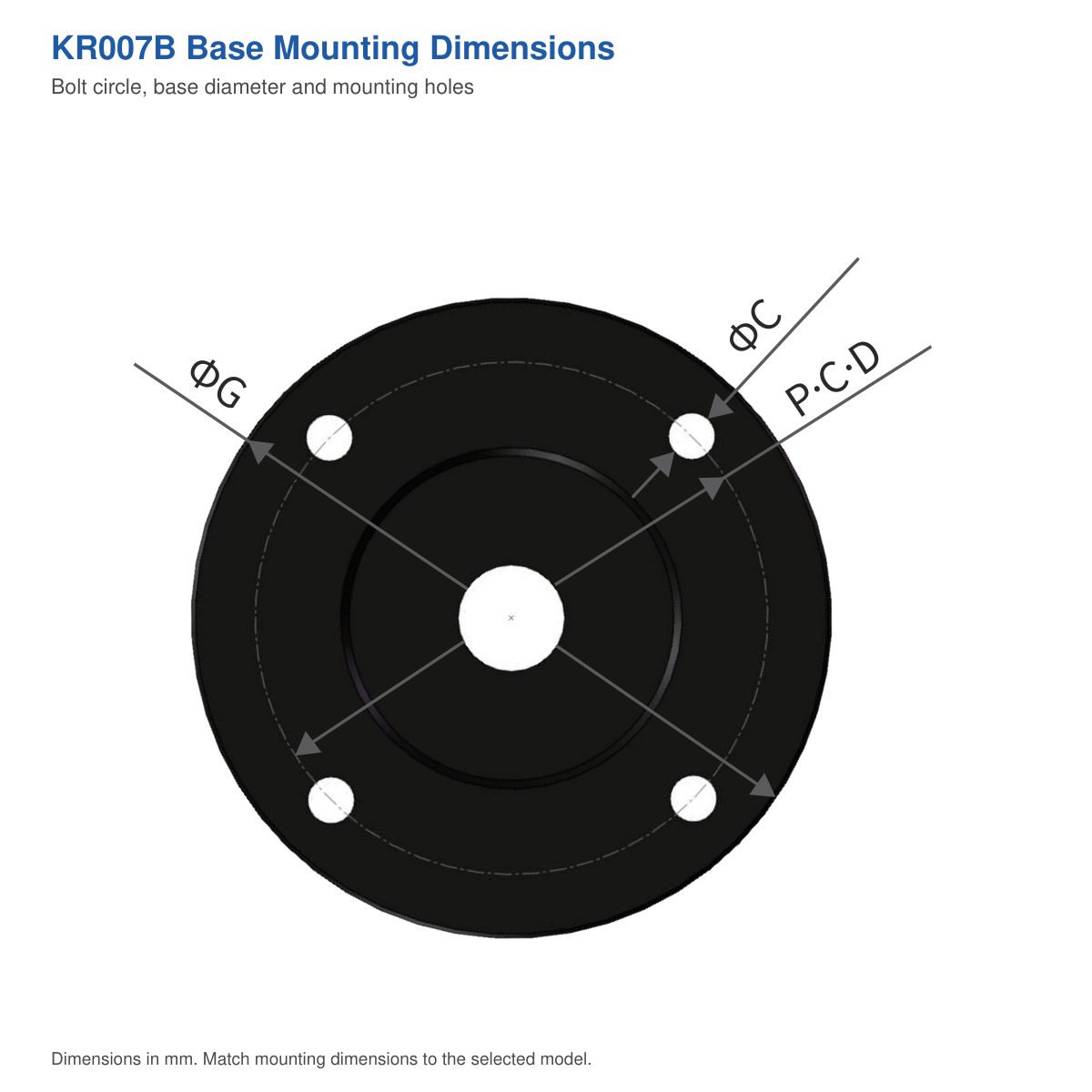
| Catalog Reference Model | P.C.Dmm | ØGmm | ØCmm |
|---|---|---|---|
| KR007B-LM-150R480 | 100 | 119 | 11 |
| KR007B-LM-300R530 | 110 | 129 | 11 |
| KR007B-LM-500R570 | 130 | 149 | 11 |
| KR007B-LM-1000R600 | 140 | 179 | 11 |
P.C.D: bolt circle diameter. ØG: base diameter. ØC: mounting hole diameter. Confirm the mounting arrangement for the ordered configuration.
TOOL CONNECTION & WORKSTATION CONTROL
Tool Compatibility and System Integration
Match the KR007B to your tightening tool first, then add controller and accessory functions according to your workstation’s position-control and error-proofing needs.
Connect the Arm to Your Tightening Tool
Tool compatibility depends on more than the torque rating. KURAN evaluates the tool housing, mounting interface, fastening direction, and total supported weight to select a suitable adapter or customized connection.
- Tool brand, model, and housing dimensions
- Mounting interface and available clamping space
- Fastening direction and required tool movement
- Combined tool, socket, and accessory weight
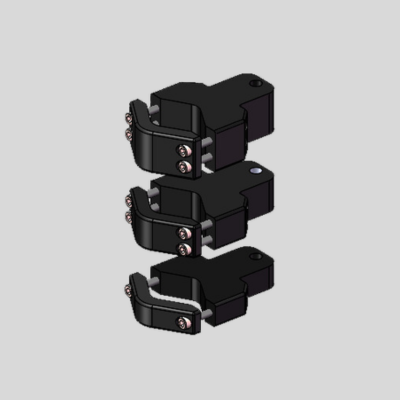
KR005 Tool Adapters
Explore standard and customized tool connections. The adapter for your KR007B is selected around the actual tool and mounting requirements.
Explore Tool AdaptersAdd Workstation Control to Sensor-Equipped Configurations
KR007B position sensors provide data for a compatible controller to evaluate. Controller selection depends on the required point management, operator guidance, data handling, and tightening-tool interfaces.
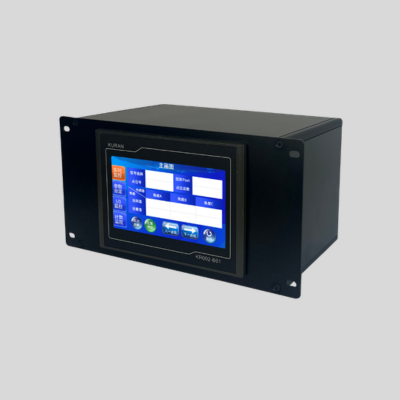
KR002-B01 Workstation Tightening Controller
Consider this controller for basic fastening-point management, program selection, sequence control, and OK / NOK feedback within a defined workstation process.
View B01 Controller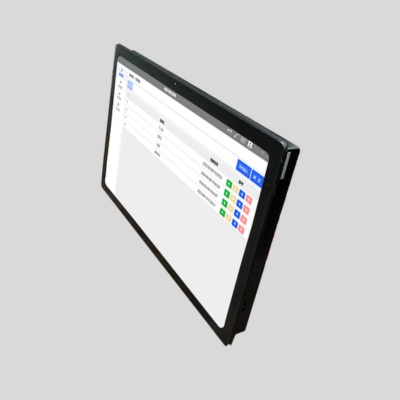
KR002-H01 Supervisory Tightening Controller
Consider this controller when your process requires visual fastening-point guidance, more detailed tightening records, or assembly traceability. Available data depends on the connected tool and system configuration.
View H01 ControllerAdd Accessories Where Your Process Needs Them
Socket selection and visual status feedback are optional additions. Include them when they address a specific workstation requirement.
Socket Selection Error-Proofing
For processes using different sockets, a KR004 Smart Socket Selector can help identify the selected socket and support the corresponding program or process check through a compatible control system.
Explore KR004 Socket SelectionVisual Workstation Status
A KR004-3SD Three-Color Tower Light can display workstation status, warnings, or tightening results. Indication logic is configured to match the workstation’s control signals.
Explore KR004-3SD Status Indication