
Industrial Tightening Control Systems for Assembly Workstations
KURAN KR002 control systems connect position-detecting torque reaction arms, compatible tightening tools, and workstation devices to manage fastening points, sequences, programs, and OK/NOK results. Choose the KR002-B01 for fixed workstation processes or the KR002-H01 for product management, traceability, and system integration.
Choose the Right Tightening Control System for Your Workstation
KURAN provides two controller options for different levels of workstation complexity. The KR002-B01 Field Controller is suited to standard tightening stations that require stable control and communication with a position-detecting torque arm. The KR002-H01 Supervisory Controller is designed for more advanced processes requiring real-time position guidance, program management, production data tracking, and greater traceability.
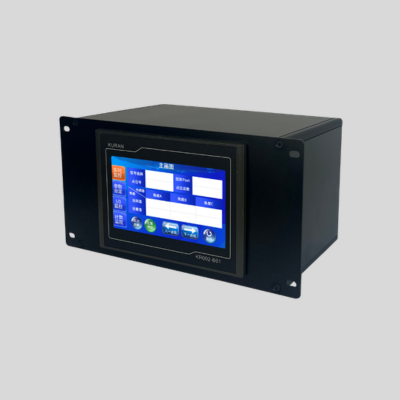
KR002-B01 Field Controller
A starting point for individual tightening workstations that need fastening-point and sequence management, with connections to compatible tools, position-detecting torque arms and peripheral devices.
- Fastening-point and sequence management
- Coordination with position-detecting torque arms
- Tool and peripheral interfaces reviewed for your application
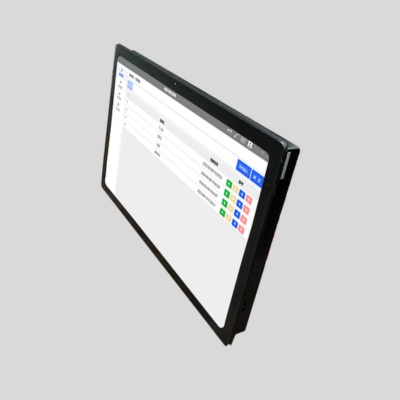
KR002-H01 Supervisory Controller
For applications requiring visual fastening-point guidance, product and program management, and tightening-data traceability. Tool communication and factory-system integration depend on the confirmed project interfaces.
- Visual point guidance and program management
- Tightening-result records from compatible equipment
- PLC and MES integration assessed against project requirements
Compare KR002-B01 and KR002-H01 Controllers
| Comparison Area | KR002-B01 Field Controller | KR002-H01 Supervisory Controller |
|---|---|---|
| Control Level | KR002-B01 Field-level control for an individual workstation | KR002-H01 Supervisory control for multiple tightening stations |
| Primary Role | KR002-B01 Executes tightening programs and controls connected field devices | KR002-H01 Centralizes program management, real-time monitoring, and process coordination |
| Operating Mode | KR002-B01 Can run predefined tightening programs independently | KR002-H01 Coordinates field controllers and connected tightening stations |
| Program Management | KR002-B01 Programs can be configured locally or received from the KR002-H01 | KR002-H01 Centralized program management with manual or barcode-based switching |
| Fastening Scope | KR002-B01 Multiple fastening points within one workstation | KR002-H01 Multiple stations, product variants, and fastening programs |
| Data Traceability | KR002-B01 Reports workstation status when connected to the KR002-H01 | KR002-H01 Records torque, angle, tightening curves, and OK/NOK results |
| Device Integration | KR002-B01 Tools, torque arms, selectors, sensors, stack lights, and other I/O devices | KR002-H01 Field controllers, tools, selectors, scanners, feeders, sensors, and other devices |
| MES / ERP Integration | KR002-B01 Available through connection with the KR002-H01 supervisory system | KR002-H01 Supports data communication with MES or ERP systems |
| Recommended For | KR002-B01 Standard standalone, semi-automated, or automated tightening workstations | KR002-H01 Complex multi-station or multi-model production requiring monitoring and traceability |
How the KURAN Tightening Control System Works
A KURAN tightening control system can be configured at different levels. A single workstation can operate with the KR002-B01, while production lines requiring centralized program control, multi-station monitoring, traceability, or MES/ERP communication can add the KR002-H01 supervisory layer.
Standalone Workstation Control
Predefined tightening parameters and fastening sequence
Tightening tool, torque arm, selector, sensors, and stack light
Provides fastening sequence status and OK/NOK results
Best for: A single workstation requiring local program execution, sequence control, and connected-device management.
Integrated Multi-Station Control
Barcode, product model, production order, or MES/ERP data
Execute the assigned programs at each tightening workstation
Returns torque, angle, tightening curves, and OK/NOK results
Best for: Multi-station or multi-model production requiring centralized monitoring, data traceability, and factory-system integration.
Typical Applications for Industrial Tightening Control Systems
KURAN tightening control systems are designed for assembly processes where torque-tool activation alone is not enough. They help coordinate programs, fastening positions, sequences, connected devices, and result data across standalone or integrated workstations.
Multi-Point Component Assembly
Suitable for products with multiple bolts or screws that must be tightened at verified positions and in a defined sequence.
Multi-Model and Mixed-Model Production
Suitable for production lines that assemble different product variants and require the correct tightening program to be selected for each model.
Traceability-Critical Assembly
Suitable for processes that require torque, angle, tightening curves, and OK/NOK results to be connected with a product or fastening point.
Error-Proof Tightening Workstations
Combine position-detecting torque arms with socket or bit selectors , sensors, and status lights.
Existing Tightening Workstation Upgrades
Suitable when an existing station already has a tightening tool but lacks position verification, sequence guidance, or centralized process data.
Integrated Multi-Station Production Lines
Suitable for multiple tightening stations that require centralized program distribution, production monitoring, and consolidated result data.
What Information Should You Prepare Before Selecting a Tightening Control System?
Accurate controller selection depends on the workstation process, connected equipment, program requirements, and the level of data management required. Preparing the following information will help KURAN determine whether your application needs the KR002-B01 alone or a supervisory system with the KR002-H01.
Workstation and Fastening Scope
- Number of tightening workstations
- Fastening points required for each product
- Standalone or coordinated station operation
Tightening Tool Information
- Tool brand, model, and controller type
- Torque and angle control requirements
- Available communication interface
Products and Program Switching
- Number of product variants
- Tightening programs required per product
- Manual, barcode, or MES-based program selection
Position and Sequence Requirements
- Fastening-point positions or workstation drawings
- Required tightening order and process rules
- Need to prevent missed or repeated tightening
Connected Devices and I/O
- Torque arms and position-detection devices
- Socket or bit selectors , stack lights, sensors, and feeders
- Required input and output signals
Data and Factory Integration
- Torque, angle, curve, and OK/NOK records required
- Data storage, export, and traceability requirements
- PLC, MES, or ERP communication requirements
Frequently Asked Questions
Find answers about KR002 controller selection, tool compatibility, position verification, sequence control, and tightening-data traceability.
What Is the Difference Between the KR002-B01 and KR002-H01?
The KR002-B01 Field Controller is designed for field-level control at an individual tightening workstation. It executes tightening programs, communicates with the tightening tool, torque arm and peripheral devices, and manages fastening-point and sequence logic. The KR002-H01 Supervisory Controller provides centralized program management, multi-station monitoring, production traceability and higher-level system integration. A KR002-B01 can operate independently or work under a KR002-H01.
Can the KR002-B01 Operate Without a KR002-H01?
Yes. The KR002-B01 can independently run predefined tightening programs and control devices at a single workstation. A KR002-H01 is added when centralized program management, multi-station supervision, expanded data collection or factory-level integration is required.
When Should I Add a KR002-H01 Supervisory Controller?
Consider the KR002-H01 when your production process includes multiple workstations, several product variants, barcode-based program switching, centralized process monitoring, production-data traceability, or communication with MES and ERP systems.
Can the KURAN System Integrate With an Existing Tightening Tool?
Integration is possible in many existing workstations, provided that the tightening tool or its controller offers compatible communication signals or interfaces. The tool brand, model, controller model and interface documentation should be reviewed before confirming compatibility. See our guide to retrofitting tool position control into an existing tightening workstation.
Can the System Control Fastening Sequence and Prevent Tightening Errors?
When connected to a position-detecting torque reaction arm and configured with the required fastening-point and sequence logic, the system can verify the current tool position and tightening order. It can block or flag missed points, incorrect locations, repeated tightening and out-of-sequence operations.
What Tightening Data Can Be Recorded?
With a KR002-H01 and a compatible tightening tool or controller, the system can collect information such as torque, angle, tightening curves, fastening point, program identification and OK/NOK results. The exact data fields available depend on the communication interface and capabilities of the connected tightening equipment.
Can the System Connect to Poka-Yoke Devices, PLC, MES or ERP?
The KR002-B01 can exchange field-level signals with tightening tools, sensors, selectors, stack lights and other poka-yoke devices. The KR002-H01 supports centralized management and communication with higher-level production systems. Available protocols, signal mapping and integration requirements must be confirmed for each project.
What Information Is Needed to Select the Right Controller?
Please prepare the number of workstations and fastening points, product variants, tightening tool brand and model, available communication interfaces, position and sequence requirements, connected peripheral devices, required production records, and any PLC, MES or ERP integration requirements. This information allows KURAN to determine whether a KR002-B01, KR002-H01 or combined architecture is appropriate.
Get a Tightening Control System Recommendation
Share your existing tool and controller models, number of workstations and fastening points, sequence requirements, and traceability needs. Include any PLC or MES interface requirements. KURAN will review your application and recommend a suitable KR002 controller configuration. You can start with the information you already have.